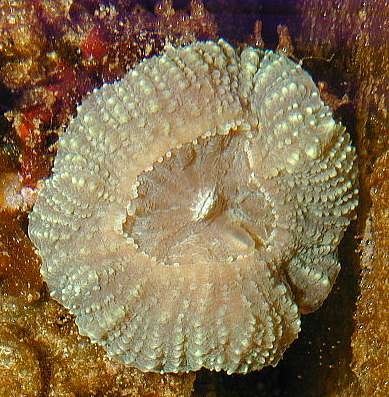
Figure 1: The Subject: Lobophyllia sp. in its normal resting state.
This lab was carried out as part of the MACO Coral Biology course led by Eric Borneman in 2001.
The purpose of this study was to observe and record the feeding behaviour and food preferences of a captive Mussid, Lobophyllia sp. The information gathered will be useful to aquarists interested in keeping and feeding corals on the same species and other related species.
The observations were made on a captive Lobophyllia sp. polyp (see Figure 1).
Figure 1: The Subject: Lobophyllia sp. in its normal resting state.
The individual used in the study is housed in a 190L (50 US gallons) tank. The individual came as a "hitchhiker" on the original "live rock" that was added to the tank in August, 1999 and so has been resident for 20 months. The corallite is approximately 5 cm in diameter.
The tank is lit by 2 150W 10000K metal halide lamps, with supplemental fluorescent lighting ("daylight" and actinic). Each day, the actinic fluorescent lamps are on from 5:45am until midnight, the "daylight" fluorescent from 6am until 9:30pm and the metal halide lamps from 8am until 6pm. The Lobophyllia sp. polyp is rarely fully expanded before the tank is in darkness.
Six food items were chosen for the study:
The trials with the 6 food items were conducted in the evening between 6:00 and 9:15pm. The metal halide lamps were off, but the supplemental fluorescent lighting was still on. All food was given to the polyp when it was in its normal resting state (See Figure 1). Food items were placed on the oral disc near the oral cone. The daytime feedings were performed in the morning and afternoon while the metal halide lights were on.
All circulatory pumps were switched off immediately before the start of observations and were left off during the observations.
The following observations are for each of the food items in the study. They combine images showing the behaviour of the polyp with text descriptions including the time of the observation. In some cases there is no image for the observation. For each set of observations, click to enable the buttons. Click to step forwards through each observation or to step back. Click automatically step through and to stop. Click to go to the first observation and to the last.
All foods were accepted except for the New Zealand mussel. It is possible the mussel piece was too large.
Table 1 lists the feeding processes used for each food in the observations.
Table 1: Feeding processes used by food item
| Food Item | Mouth | Tentacles | Mesenterial Filaments |
| Prawn | Yes | Yes | Unknown |
| Mussel | Yes | Partial | Unknown |
| Scallop | Yes | Partial | Unknown |
| "Krill" | Yes | Yes | Yes |
| "Ocean Plankton" | Yes | Yes | Unknown |
| Roe | Yes | No | Probably |
All food must path through the mouth, however, in each of the observations, the mouth also played a part in maneuvering the food items. It appears the tentacles were only used for large food items or where the food item was an odd shape. It is likely that the mesenterial filaments were used for all food items, but in 3 of the observations, they would have been obscured from view, if they were used. For, the "plankton", the mesenterial filaments could not be seen, but the movement of the shrimp into the mouth of the polyps suggests their use.
Table 2 lists the time taken from the when food was placed in the polyp to each of the reactions.
Table 2: Time in minutes to each feeding reaction from the time the food item was placed in the oral disc.
| Prawn | Mussel | Scallop | "Krill" | "Plankton" | Roe | |
| Mouth open | 3 | - | <1 | <1 | 1 | <1 |
| Tentacles extended | 1 | 3 | <1 | <1 | 2 | <1 |
| Food in mouth | 5 | 4 | 4 | 11 | 5 | 2 |
| Mouth closed | 39 | - | 25 | >120 | 48 | 10 |
| Ready State | >60 | >120 | >60 | >120 | 48 | 14 |
In most cases, the initial reaction time of the polyp was quick. Three minutes was the longest it took to react with both the mouth and the tentacles. The amount of time it took the polyp to get food to its mouth varied. This is probably related to the shape and size of the food item. Smaller more round objects were the quickest. The "krill" with an elongated shape was the longest. The item taken to get the food item in the mouth and the mouth closed also varied greatly. Again, this would be related to the shape and size of the food item. As subsequent feedings were not attempted, the time to Ready State is only a guess based on the appearance of the polyp.
Table 3 show the feeding processes used by time of day for "Ocean Plankton" as a food item.
Table 3: Feeding processes used by time of day
| Food Item | Mouth | Tentacles | Mesenterial Filaments |
| Morning | Yes | Partial | Unknown |
| Afternoon | Yes | Partial | Unknown |
| Evening | Yes | Yes | Unknown |
There appear to be no obvious differences in the process used by the polyp to feed on the same type of food item at different times during the day. And differences can be attributed to the placement of the food item.
Table 4 lists the time taken from the when food was placed in the polyp to each of the reactions.
Table 4: Time in minutes to each feeding reaction from the time the "plankton" was placed on the oral disc.
| Morning | Afternoon | Evening | |
| Mouth open | 1 | <1 | 1 | Tentacles extended | 2 | 1 | 2 |
| Food in mouth | 4 | 2 | 5 |
| Mouth closed | 12 | 6 | 48 |
| Ready State | 21 | 5 | 48 |
The reaction times of the afternoon feeding appear significantly shorter for the afternoon feeding when compared with the morning and evening feedings. The time of day may have been significant or it may simply have been the size of the shrimp and its initial placement.
Before discussing any of these results in any detail, it must be noted that the sample size (one individual) and the number of observations (8) is extremely small and not statistically significant. This will largely make the evidence presented here anecdotal. However, one observation is better than none and eight observations are 8 times better than one.
It is not obvious from the results if this particular Lobophyllia individual had any particular preference from the food items offered. All were accepted and the processes used and reaction times appear, and this is pure speculative, to be more related to shape and size of the food item rather than its origin. Further observations, with similarly sized food items of different types and varying sizes of the same type of food items to test this hypothesis.
The time of day, appears to have little to do with overall acceptance of the food items tested, but may influence the time taken to engulf the food. The afternoon feeding was significantly quicker that the other two feeding. There appears to be no obvious benefit to the coral to feed more quickly at one time during daylight hours than another and the observation may simply be the result of the size, shape and/or placement of the food item.
As stated in the discussion, the sample size and number of observations are far to small to make definitive conclusions. It is safe to say, however, that this particular coral can be fed at any time of the day on a wide range of food items.
Last updated: June 5, 2005